
By Abubakar Adamu Muhammed
The day often begins early in Wuro Ladde.
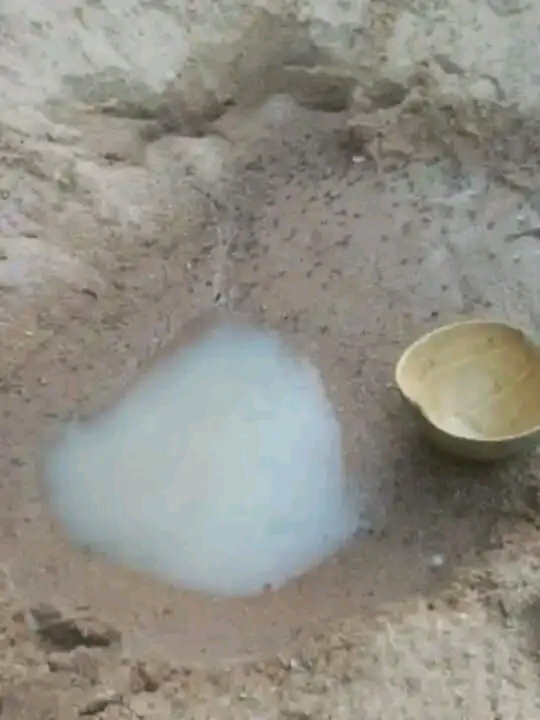
Before sunrise, women and children once set out carrying buckets and jerrycans, hoping to find water before the heat of the day set in. Their destination was usually a stream or a hand-dug well. But during the dry season, there was no guarantee that water would be waiting for them.
For many families in this rural community in Mayo Belwa Local Government Area of Adamawa State, the search for water was once a daily struggle.
Among those who remember those difficult days is Binta Mohammed, a mother of seven.
“We suffered a lot before we got the borehole,” she recalls. “Our wells and streams usually dried up during the dry season, and getting water became very difficult.”
Her experience reflects a challenge facing many rural communities across Africa. As rainfall patterns become less predictable and dry seasons more intense, traditional water sources are becoming increasingly unreliable. In communities like Wuro Ladde, climate change is not experienced through scientific reports or global conferences. It is felt through empty wells, shrinking streams, and the daily search for water.
When the wells dried up, the burden fell mostly on women and children.
A journey that should have taken a few minutes often stretched into hours. Time that could have been spent in school, on the farm, or caring for family was instead devoted to finding a basic necessity.
Isa Alim, a community member, remembers watching women and children leave home with empty containers, uncertain of how long it would take before they returned.
“Our children and women had to travel long distances before they could fetch water,” he says. “Sometimes they spent hours looking for water for the family.”
While climate discussions often focus on floods, droughts, and rising temperatures, the daily struggle for water in communities such as Wuro Ladde receives far less attention. Yet it remains one of the most visible ways environmental change affects ordinary lives.
Then came a turning point.
Through the intervention of their elected representative, a motorized borehole was provided for the community. For the first time in years, families gained access to a more reliable source of water, even when traditional sources failed.
But the story of Wuro Ladde is not simply about a borehole.
It is about what happened afterward.
Recognizing the importance of the facility, residents chose not to rely solely on outside support. Instead, they organized themselves, formed a maintenance committee, and agreed to contribute resources whenever repairs were needed.
Today, the borehole stands as more than a source of water. It represents a community-led response to a growing environmental challenge.
According to Isa Alim, the community’s commitment to maintaining the facility has helped ensure that future generations do not experience the same hardship.
“With the borehole, life has become easier for us,” he says. “Because we work together to maintain it, we continue to benefit from it.”
Too often, climate stories focus only on loss and vulnerability.
Wuro Ladde offers a different perspective. It is the story of a community that faced a growing water crisis and responded with cooperation, responsibility, and resilience.
The streams still shrink during the dry season, and the wells still run dry. The climate challenge has not disappeared. But the people of Wuro Ladde have shown that resilience is not always built through large-scale projects or expensive technology.
Sometimes, resilience begins with a community coming together to protect a single borehole.
And in a place where water once meant hours of uncertainty, that simple act has become a lasting source of hope.