
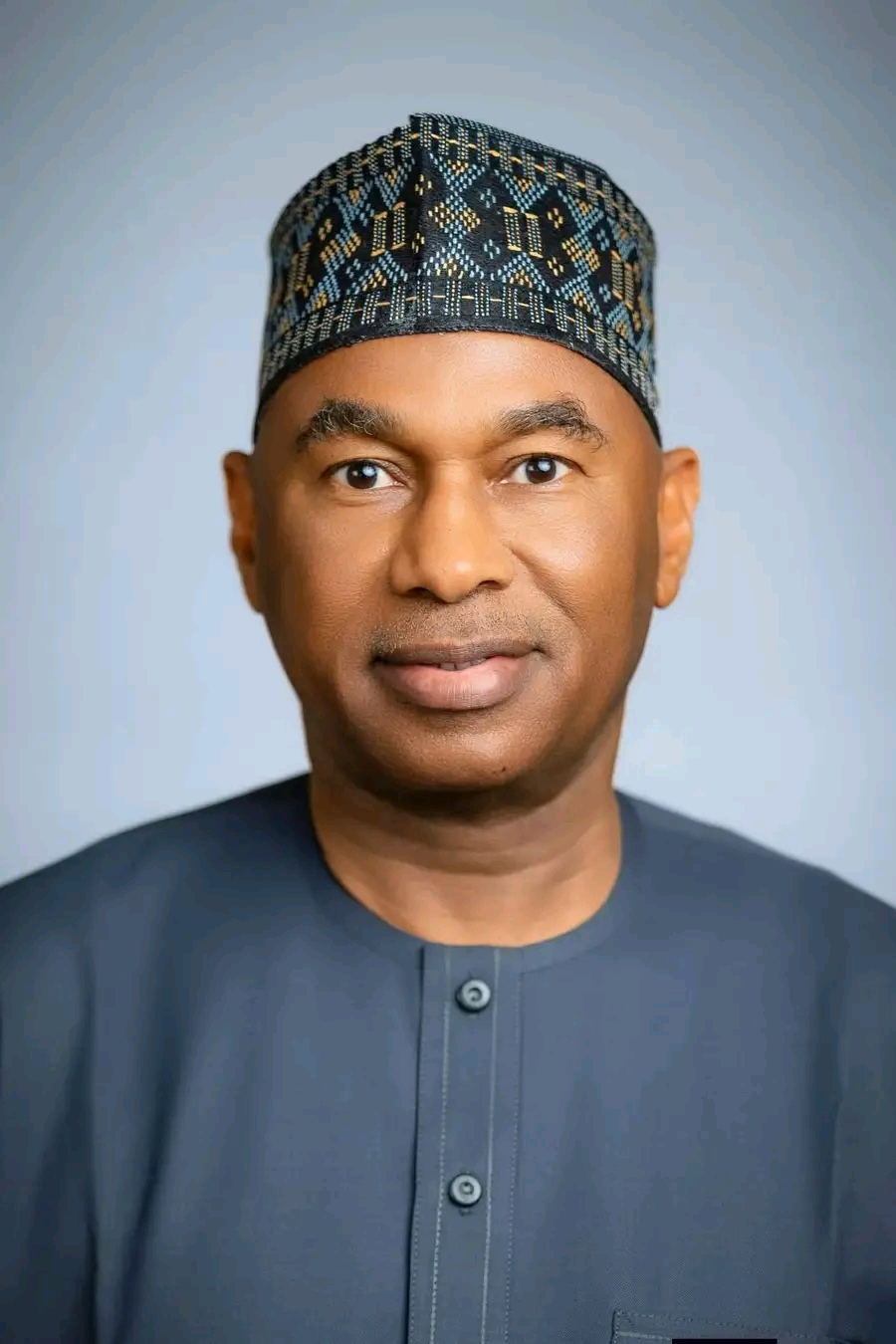
By Adamu Sambo
Beyond Politics, Towards a Shared Covenant for a Greater Adamawa
There comes a time in the life of every society when it must look beyond the immediate contest for political power and ask a more fundamental question: What kind of future are we prepared to build for ourselves and for the generations that will come after us?
For Adamawa State, that time is now.
The 2027 governorship election presents the people with an opportunity to make a choice, but the choice should not be reduced to personalities, political parties or the usual promises that accompany election seasons.
The more important question is whether Adamawa can agree on a shared development direction—one that survives political cycles, draws strength from the people and converts the enormous potential of the state into sustainable prosperity.
This is where the Adamawa Rising Agenda of the APC Governorship Candidate, Ahmed Galadima Aminu, assumes significance.
At its heart, the agenda is not simply a campaign document. It is a proposition about what Adamawa can become if government, citizens, communities, businesses, farmers, young people, women, professionals and institutions accept that the responsibility for development belongs to all of us.
That is why the people of Adamawa should not merely listen to the Adamawa Rising Agenda.
They should own it.
A New Conversation About Adamawa
When Ahmed Galadima Aminu unveiled the Adamawa Rising Agenda, he framed his ambition as a conversation about where Adamawa is today, where it should be tomorrow and the kind of leadership required to take it there. He also made clear that responsible government should not pretend that everything done before it was wrong.
That distinction is important.
Development is not achieved by endlessly starting over.
Nations and states progress when they build institutions, preserve successful policies, learn from shortcomings and introduce better ideas where circumstances demand them.
Adamawa therefore needs a development philosophy that says:
Keep what works. Improve what does not. Introduce what is needed. And never stop raising the standard.
This is the deeper meaning of “Build on, not Bulldoze.”
It is a philosophy of responsible succession, institutional continuity and purposeful innovation.
The People Must Become Co-Architects of Development
For too long, development in many societies has been understood as something government does for the people.
That understanding must change.
The modern development state is one in which citizens are not passive recipients but active participants.
The farmer should have a voice in agricultural policy.
The business owner should have a voice in economic policy.
The young person should have a voice in employment and skills policy.
The teacher should have a voice in education reform.
The healthcare worker should help shape improvements in the health system.
Traditional and religious leaders should contribute to peacebuilding and social cohesion.
Communities should participate in determining priorities and monitoring projects.
This is the kind of ownership that can turn the Adamawa Rising Agenda from a political programme into a people’s development compact.
Because when citizens own an idea, they do not merely wait for government to implement it. They defend it, contribute to it, monitor it and help make it succeed.
From Potential to Productivity
Adamawa possesses enormous potential.
Its land is fertile. Its people are industrious. Its young population is energetic. Its strategic location offers opportunities for commerce. Its agricultural and mineral resources provide possibilities for economic diversification.
The challenge is not simply to identify these resources.
The challenge is to convert potential into productivity and productivity into prosperity.
This is one of the central ideas articulated by Galadima Aminu in presenting the Adamawa Rising Agenda. His stated objective is to move the state’s economy beyond dependence on public spending and federal allocation towards production, enterprise, investment and innovation.
That is precisely why the people must own the agenda.
Government alone cannot create a thriving economy.
Government can provide the enabling environment.
But farmers produce.
Entrepreneurs innovate.
Workers create.
Investors invest.
Young people acquire skills.
Communities provide stability.
Professionals contribute knowledge.
And citizens patronise businesses.
Prosperity is therefore a collective enterprise.
Agriculture Must Become a Business of Prosperity
For Adamawa, agriculture cannot remain merely an occupation passed from one generation to another.
It must become a modern economic enterprise.
The state has the land, the people and the agricultural tradition. What is required is a deliberate effort to connect production with irrigation, mechanisation, storage, processing, transportation, finance and markets.
The Adamawa Rising Agenda’s emphasis on agro-industrial development, irrigation, mechanisation, storage and value chains speaks directly to this challenge.
Imagine what it would mean if a young farmer could produce rice, maize, groundnut, sesame or soybeans and know from the moment of planting where the produce would be stored, processed and sold.
Imagine rural communities where agriculture creates not only farmers but transporters, mechanics, processors, marketers, technology providers, financial services and thousands of other jobs.
That is how agriculture becomes an engine of economic transformation.
And that transformation will only endure when the farmers themselves see themselves as partners in the agricultural economy, not beneficiaries of occasional government intervention.
Young People Must See a Future in Adamawa
Perhaps no group has a greater stake in Adamawa Rising than the youth.
A state cannot rise when its young people feel that their only options are to leave, remain unemployed or depend indefinitely on government.
The real objective must be to create an economy in which young people can build meaningful lives at home.
That means skills.
It means entrepreneurship.
It means access to finance.
It means technology.
It means vocational education.
It means opportunities in agriculture, manufacturing, construction, creative industries, digital services and other emerging sectors.
Galadima Aminu has identified youth skills, enterprise and opportunity as central to the agenda, linking economic empowerment not only to prosperity but also to social stability and security.
This is important because a young person with hope is an asset to society; a young person without opportunity is a challenge society must address.
Adamawa must therefore invest in its young people not merely because they are numerous, but because they are the state’s greatest long-term productive asset.
Unity Is Not Just a Political Slogan
Adamawa’s diversity should be one of its greatest strengths.
Our different ethnic communities, faiths, cultures and traditions constitute a rich social fabric.
But diversity becomes an obstacle only when political interests manipulate it into division.
A rising Adamawa must be an Adamawa in which citizens are judged by their character, competence and contribution—not by where they come from, what language they speak or which faith they profess.
This is why the principle that “no citizen is more Adamawa than another” should become more than campaign rhetoric.
It should become a governing philosophy.
There is no sustainable development without peace.
There is no investment without confidence.
There is no meaningful education without security.
There is no prosperous agriculture where communities are locked in conflict.
There is no shared prosperity where citizens do not trust one another.
Therefore, building unity is not simply a political responsibility.
It is an economic imperative.
The Continuity Adamawa Needs
One of the most refreshing aspects of the Adamawa Rising philosophy is its emphasis on continuity.
Adamawa has already invested in roads, infrastructure and institutions. The question for the next administration should not be whether to recognise those investments, but how to make them generate greater economic value for ordinary citizens.
Galadima Aminu has specifically posed the question of how infrastructure can be transformed into productivity and roads into economic corridors.
That is the right question.
A road is more than asphalt when it enables a farmer to reach a market.
A bridge is more than concrete when it connects communities to opportunity.
A school is more than a building when it produces skilled and confident young people.
A hospital is more than infrastructure when it saves lives.
Government investment becomes meaningful when it improves the productive capacity and dignity of citizens.
Governance Must Be Measured by Results
The people of Adamawa should also own the responsibility of demanding accountability.
They should ask difficult questions.
What was promised?
What was budgeted?
What was delivered?
What changed in the lives of citizens?
The Adamawa Rising Agenda’s emphasis on measurable governance, including stronger monitoring, delivery mechanisms, open budgeting and citizen accountability, points in the right direction.
But accountability cannot be left to government institutions alone.
Citizens must participate.
Civil society must scrutinise.
The media must ask questions.
Professional bodies must contribute expertise.
Traditional institutions must help mobilise communities.
And elected representatives must remain answerable to the people.
That is how democracy becomes more than periodic voting.
Why Galadima Aminu’s Background Matters
The argument for ownership of the Adamawa Rising Agenda is strengthened by the leadership philosophy its candidate brings to the table.
Ahmed Galadima Aminu’s career in public service, including his tenure as Executive Secretary of the Petroleum Technology Development Fund, has placed him within the world of institutional management, human-capital development and public administration. His public profile also reflects an emphasis on education, capacity building and institutional strengthening.
But experience alone is not enough.
What matters is how that experience is translated into a development philosophy capable of responding to Adamawa’s present realities.
The opportunity before the state is therefore to move from administration to transformation; from dependence to productivity; from potential to performance; and from isolated government interventions to a coordinated development strategy.
Adamawa Rising Must Outlive 2027
Perhaps the most important test of the agenda is whether it can survive beyond an election cycle.
If it belongs only to a candidate, it will be vulnerable to the fortunes of politics.
If it belongs to the people, it can become a long-term development philosophy.
That is why Adamawa Rising should not end with the 2027 election.
Its principles should inform how communities engage government, how businesses invest, how young people prepare themselves, how farmers organise, how institutions function and how citizens measure leadership.
The real victory will not simply be winning an election.
The real victory will be creating an Adamawa in which the next generation inherits better schools, stronger institutions, productive farms, better roads, safer communities, more jobs, stronger businesses and a renewed belief in the possibilities of their state.
The Choice Before Adamawa
Ultimately, the choice before the people of Adamawa is not simply between one politician and another.
It is between different visions of what the future can be.
One approach sees government as the beginning and end of development.
Another sees government as the catalyst for unleashing the productive capacity of the people.
The first creates dependence.
The second creates ownership.
The first asks citizens what government can give them.
The second asks citizens what they can build together.
The Adamawa Rising Agenda belongs to the second tradition.
It asks the people to believe that Adamawa’s future is not predetermined by its challenges.
It asks farmers to believe that their land can generate greater wealth.
It asks young people to believe that their future can be built at home.
It asks entrepreneurs to believe that Adamawa can become a place where enterprise flourishes.
It asks communities to believe that development can reach them.
And, above all, it asks every citizen to believe that the state can rise when its people decide to rise together.
The Time to Own the Future Is Now
Ahmed Galadima Aminu may have presented the Adamawa Rising Agenda, but its ultimate success cannot belong to him alone.
It belongs to the people.
It belongs to the farmer who wants a better market.
It belongs to the young graduate seeking opportunity.
It belongs to the woman building a small business.
It belongs to the teacher who wants better learning outcomes.
It belongs to the professional who wants to return home and contribute.
It belongs to the community that wants a road, electricity, water or healthcare.
It belongs to every citizen who wants to see Adamawa move beyond potential and into prosperity.
That is why the people must take ownership.
Because Adamawa Rising is not fundamentally about what government can do for Adamawa. It is about what Adamawa can become when government and its people work together with a common purpose.
The task before us is therefore greater than winning an election.
It is the task of building a future.
A future in which continuity does not mean complacency.
A future in which change does not mean destruction.
A future in which politics serves development rather than divides society.
A future in which every citizen has a stake.
And a future in which the name Adamawa is associated not merely with potential, but with productivity, prosperity, peace and dignity.
Adamawa can rise.
But it will not rise because one man says so.
It will rise when its people believe in the possibility, take ownership of the vision and accept the responsibility of building it together.
That is the true meaning of Adamawa Rising.
That is the pathway to a Greater Adamawa.
Adamu Sambo MFR,
Media Aide to APC Governorship Candidate, Adamawa State writes from Abuja